
By Denzome Sampang
We live in an age where equality is one of the most uttered words in public discourse. You will find it splashed across national constitutions, entrenched in human rights rhetoric, preached in religious sermons, printed in school textbooks, and chanted at political rallies. Leaders swear to deliver it. Institutions affirm it. At face value, there are few who reject the notion that all human beings deserve dignity and fair treatment. And yet here we are, where people continue to experience segregation and discrimination and denial of others’ basic human dignity because of the caste they are born into, or the sect, or the family.
It’s time we ask ourselves some tough questions about why principle and practice are worlds apart. If we claim to agree on equality, why is there measurable inequality along the lines of caste, race, gender, disability, class, and religion? If we agree that all humans deserve dignity and equal treatment, why do outcomes vary so greatly along lines of identity?
Caste-based discrimination remains a human rights concern. Amnesty International (2024) conducted research that determined ongoing and systematic caste-based discrimination against Dalits in Nepal was still occurring. Discrimination consisted of limited access to justice and underreporting, as well as ongoing untouchability practiced towards Dalit women in both rural and urban communities. The Office of the High Commissioner for Human Rights reported that discrimination based on caste still plays a factor in the economic marginalization of people.
UN special rapporteur on extreme poverty and human rights believes almost 42 percent of Dalits survive on less than the poverty line, while Nepal has poverty of about 25.2 percent (De Schutter, 2021). The report found that Dalits were discriminated against when trying to obtain land rights, work, education, and public services. According to the United States Department of State (2023), caste-based discrimination is still present all throughout Nepal. Although it is illegal to discriminate against people because of their caste, people are still affected by it through their education, job, and the services they can obtain.
Discrimination beyond national boundaries
Discrimination doesn’t stay within the borders of a country. Caste and racism travel with people. Studies have proven how systems of exclusion tend to find people wherever they go.
In a peer-reviewed survey of Nepali Dalits residing in the San Francisco Bay area, the majority of respondents faced caste discrimination while living in the U.S. This discrimination occurred in the workplace and when seeking housing, at religious sites and institutions, and within friend groups. (Pariyar, 2022). It is the case that many of them have said they hid their caste or family status to avoid social distance or professional harm. This would indicate that even in societies with strong anti-discrimination laws, informal social hierarchies can remain.
We see these same dynamics in professional workspaces around the world. For instance, qualitative research which carried out life story interviews with Dalit computer engineers recently found that caste continues to be relevant even in spaces that claim to be meritocratic and ‘casteless’ (Vaghela et al., 2022). This research found that people from marginalized castes often feel pressure to hide their identity.
Inequality Extends Beyond Caste and Race
Obvious forms of exclusion exist on the axes of race and caste. But apart from this, there exists discrimination across multiple dimensions.
A woman from an upper caste could be privileged by caste and discriminated against by gender at the workplace or in a kitchen. A forward-caste man could face discrimination if he falls in the lower economic classes or if he is differently abled. In America, Black women face a Maternal Mortality rate 2.5 to 3.5 times higher than that of White women. (CDC, most recent data) . LGBTQ workers are often discriminated against at their place of employment in many countries, despite laws that include nondiscrimination language (Sears et al., 2023).
Inequality is intersectional. It may take different forms depending on place and time. But it will always disadvantage the groups with less structural power.
Religious teachings and the paradox of inequality
It’s even more astonishing that discrimination still exists today when you take into consideration the scriptures’ preaching equality to society. In the Qur’an, it says that humans are not born superior to another because of family but because of their good deeds (49:13). Bhagavad Gita proclaims how a righteous man sees one life within all animals without any prejudice of class (5:18). Paul wrote in Galatians how Christians were taught to belong to one another, no matter your place in society (3:28). Sikhism rejects the caste system, emphasizing equality of all humans regardless of birth.
Sociologically speaking, religion seems to fall short when power, socialization, and traditional rituals become involved (Weber, 1922/1978). So the issue is not that our faiths don’t teach equality. The issue is that we don’t put those teachings into practice.
Research from social psychology reveals that people are able to genuinely endorse a belief in equality, while engaging in discriminatory behavior as long as such behavior is institutionalized within culture and tradition (Banaji & Greenwald, 2013). If an inequality is presented as a custom or social order, it becomes hard to question, and silence supplants accountability.
Why equality remains an idea rather than a reality?
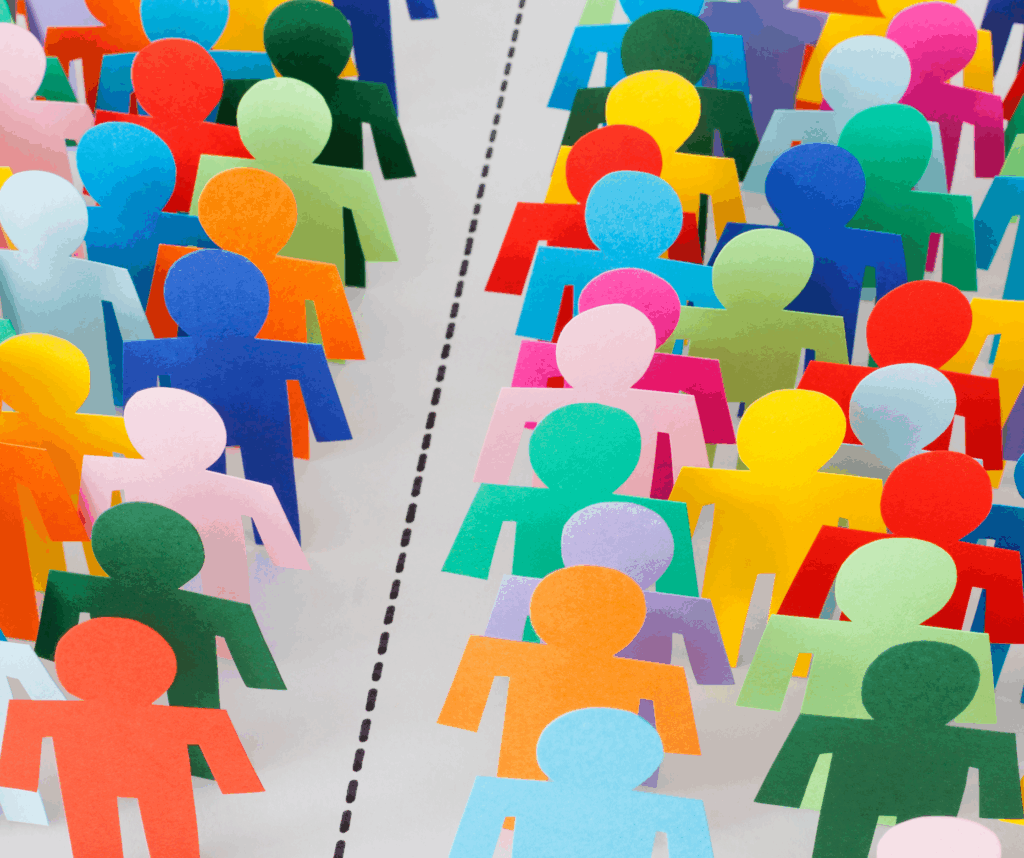
When I refer to equality in this article, I don’t mean that all people should be the same. Equality doesn’t mean the same abilities. Same beliefs. Same level of awareness. Same life choices. It’s not about being the same size and shape. Every person will always be different. Different personality. Different culture. Different talents. Different perspective. Different from many ways. Nature made us that way, and that is beautiful. Real equality is when everyone is treated with respect. Governed by the same laws, given equal opportunities, and not judged by prejudices. But how is it that equality is still just an idea and not a reality?
No doubt, equality is widely accepted in idea, but in reality tells a different story. If equality were truly realized, we would not see persistent gaps in leadership, opportunity, and social treatment across communities. But why? Let’s look at a few obvious reasons.
1. Structural poverty and exclusion
One reason equality remains an idea is systemic exclusion. In Nepal, for example, Dalits make up approximately 13 percent of the population. However, they make up approximately 42 percent of those who fall below the poverty line, when the national poverty rate is closer to 25 percent (Office of the United Nations High Commissioner for Human Rights, 2021). No society chooses to systematically deny a group access to owning land, education, dignified labor, or public services starting today. It takes generations of gates being put into place.
We see this trend repeated around the world. Systemic discrimination played a major role in the economic inequality between white people and Black people in the United States. For years in the United States, redlining prevented Black people in majority Black neighborhoods from being approved for mortgages. According to the Federal Reserve, the median white family had over $220,000 USD more in wealth than the median black family in 2022(Federal Reserve, 2023). Researchers have been able to link this gap to redlining. Redlining was a policy that for years excluded Black people from being given a mortgage to own a home in majority neighborhoods(Aaronson et al., 2020).
Numerous tech companies will say they are built on meritocracy and treat all employees equally. But studies of caste in tech workplaces across the world have found that caste discrimination can persist invisibly, even in workplaces that believe they don’t have caste (Vaghela et al., 2022). Who you know, who you resemble socially, and who you feel comfortable with socially can inform who gets promoted or opportunities. Those who are already inside the gate will accrue these advantages.
2. Gatekeeping at entry points
By gatekeeping at entry points, we mean gatekeeping at the gate. If this entry is influenced by implicit bias or institutional favoritism, then inequality is created before a person has the opportunity to demonstrate ability. Let us see one real example of this reality. Researchers conducting what has been celebrated as the largest audit study to date found that resumes with traditionally white-sounding names received 50 percent more callbacks than equally qualified resumes with traditionally black-sounding names. (Bertrand & Mullainathan, 2004). Applicants were denied the opportunity to speak to their qualifications before applying.
In another study conducted with Nepali Dalits living in America, many Dalits reported hiding their caste identity socially and professionally because of fear of discrimination. (Pariyar, 2022). Silence became a survival tactic.
3. Underrepresentation in leadership and power
Equality is most apparent in power structures. Saying that you believe in equality is one thing. Actively cultivating spaces where decisions are made to reflect that value is another. Leadership decides who gets to have their voices heard in policy-making, whose priorities are financially supported, and whose experiences become institutionalized as the default. If certain communities are not at the table in leadership positions, then opportunities are not equal.
Looking at leadership across our cultures, we see a similar trend of disproportion. Leadership within our governments, businesses, universities, and public institutions does not typically look like representation. If certain groups are excluded from leadership, then it is systematic. Equality isn’t just making sure everyone is treated the same. It’s also making sure we aren’t limiting who has access to power.
Black Americans make up about 14 percent of the population, but make up about 1-2 percent of Fortune 500 CEOs (Fortune, recent data). Leadership positions aren’t exclusionary by accident. The people who have the keys to the network, sponsors, and institutional knowledge decide who makes it to the top.
Dalits in Nepal are vastly underrepresented in civil service positions and political groups with decision-making authority (UNHCHR, 2021). Institutions will not evolve if there are no people in power who represent those communities.
4. Media portrayal and invisibility
Systemic exclusion happens in many ways besides laws and economics. It also operates through media portrayal.
The media can influence how people view the world around them. Who we see portrayed as capable, smart, heroic, or trustworthy affects how we, as a society, assign value and respect or opportunities to others. When certain groups of people are invisibilized or consistently depicted in narrow ways, the exclusion becomes cultural.
According to the USC Annenberg Inclusion Initiative, several films in the top 100 grossing films of recent years had zero Black speaking characters, out of a country that is 13.6% Black (Smith et al., 2024). When there is representation, lead roles and nuanced characters are also often distributed unequally.
Like policy and economic systems, media representations and underrepresentations matter. If children cannot see people like themselves depicted as leaders or high achievers in academics or careers, it trains how they see themselves in the world. Similarly, if movies and TV constantly depict certain communities as criminals or responsible for social problems, that impacts how people perceive and interact with members of those communities when making decisions about hiring or who they can trust as police officers on the street.
5. Weak enforcement and fear of reporting
We have laws preventing discrimination from happening. But sometimes the problem isn’t a lack of laws. Some laws just aren’t enforced uniformly. When victims do not feel safe to report their cases, instances of discrimination go unaddressed. Amnesty International (2024) states that Nepal’s Caste-based Discrimination and Untouchability Act (2011) remains largely unused, with only about 30-43 complaints filed yearly despite high numbers of discrimination cases.
Victims fear coming forward to file a complaint about discrimination because they are afraid to be turned away from their community, be avoided by everyone around them, or risk hurting their career. Victims of discrimination face this fear all around the world, not just in South Asia. The United States has strong laws against workplace discrimination. Research has shown that, despite these laws, many workers will not file official complaints out of fear of negative impacts to their careers, social acceptance, or mistrusting the complaint process (U.S. Equal Employment Opportunity Commission, 2016). If there are barriers to reporting or retaliation fears, these prejudices will continue to occur underground.
Svikarokti Philosophy as a corrective framework
Inequality persists because systems quietly reproduce it, despite the fact that we have policies and laws that condemn it. Inequality also persists because of two additional reasons, i.e., lack of awareness and awareness itself fades. Therefore, it requires more than legislation or speeches to overcome this challenge. It requires vigilant moral inventory and equitable validation of all existence. It requires awareness, and awareness that doesn’t fade under the influence of power and pressure.
That is where Svikarokti Philosophy can help. Literally translated, Svikarokti itself is the philosophy of embracing everyone wisely with conscious acceptance, beyond name-based social validation. It will generate a sustainable systemic equilibrium through Svikarokti Inner Awakening.
Should humanity be able to reshape faith traditions to positively support self-regulation, redefine cultural norms, and reform segregationalist practices with the Svikarokti framework, societies will start fostering authentic dignity, mutual accountability, and begin instituting true harmony and equality across the board. Svikarokti emphasizes acceptance that transforms psychological states like fear into positive actions such as discipline, respect, and peace. Equality only proves itself to work when it is put into practice.
Accepting equality through Svikarokti Philosophy creates permanent change because you are starting from a place of awareness and acceptance, not one that you inherited.
References
Aaronson, D., Hartley, D., & Mazumder, B. (2020). The effects of the 1930s HOLC “redlining” maps. Federal Reserve Bank of Chicago. https://www.chicagofed.org
Amnesty International. (2024). “No-one cares”: Descent-based discrimination against Dalits in Nepal (ASA 31/7980/2024). https://www.amnesty.org
Banaji, M. R., & Greenwald, A. G. (2013). Blindspot: Hidden biases of good people. Delacorte Press.
Bertrand, M., & Mullainathan, S. (2004). Are Emily and Greg more employable than Lakisha and Jamal? A field experiment on labor market discrimination. American Economic Review, 94(4), 991–1013. https://doi.org/10.1257/0002828042002561
Board of Governors of the Federal Reserve System. (2023). Changes in U.S. family finances from 2019 to 2022: Evidence from the Survey of Consumer Finances. https://www.federalreserve.gov
Centers for Disease Control and Prevention. (2023). Maternal mortality rates in the United States. National Center for Health Statistics. https://www.cdc.gov
Office of the United Nations High Commissioner for Human Rights. (2021). Statement by the UN Special Rapporteur on extreme poverty and human rights on his visit to Nepal. https://www.ohchr.org
Pariyar, P. (2022). When I tell them my caste, silence descends: Caste-based discrimination among Nepali Dalits in the United States. CASTE: A Global Journal on Social Exclusion, 3(2), 159–175.
Sears, B., Mallory, C., Flores, A., & Conron, K. J. (2023). Workplace discrimination against LGBTQ people. Williams Institute, UCLA School of Law. https://williamsinstitute.law.ucla.edu
Smith, S. L., Choueiti, M., & Pieper, K. (2024). Inequality in popular films. USC Annenberg Inclusion Initiative. https://assets.uscannenberg.org
U.S. Department of State. (2023). Country reports on human rights practices: Nepal. https://www.state.gov
U.S. Equal Employment Opportunity Commission. (2016). Select task force on the study of harassment in the workplace. https://www.eeoc.gov
Vaghela, P., Jackson, S. J., & Sengers, P. (2022). Interrupting merit, subverting legibility: Navigating caste in “casteless” worlds of computing. Proceedings of the ACM on Human-Computer Interaction, 6(CSCW2), Article 27. https://doi.org/10.1145/3502059
Weber, M. (1978). Economy and society: An outline of interpretive sociology (G. Roth & C. Wittich, Eds.). University of California Press. (Original work published 1922)